
Low-Impact Cardio Alternatives for Days When You’re Feeling Sore
Find Your Personal Trainer
Published: February 7, 2026
Leg day felt great yesterday, yet today your legs feel heavy and stiff. That pattern often shows delayed onset muscle soreness, which usually peaks between twenty-four and seventy-two hours after intense training. You still want progress, but your body asks for mercy. At DubaiPT, we see this conflict every week when someone starts with a personal trainer in Dubai and tries to train hard every single day. On those days, low-impact cardio alternatives for days when you’re feeling sore keep you moving without pushing pain higher. Health guidelines suggest at least one hundred fifty minutes of moderate activity each week plus two strength sessions. You can still reach those targets when you shift to low-impact workouts instead of skipping activity completely.
Why Your Sore Muscles Still Like Low-Impact Days
Soreness does not mean you stop all movement; it means you adjust how you train. DOMS comes from tiny muscle damage after heavy or new sessions, and your heart still needs regular work while muscles recover. Low-impact cardio raises your heart rate, yet it limits stress on joints and tender spots. Blood flow improves, so stiffness usually fades faster. We coach clients to use a simple pain scale before each workout and stay in the light to moderate zone on sore days. Our trainers also guide them through structured cardio exercises that match this goal. Used this way, low-impact cardio alternatives for days when you’re feeling sore act like an “active reset” instead of a punishment.
Simple Low-Impact Options You Can Try Tomorrow
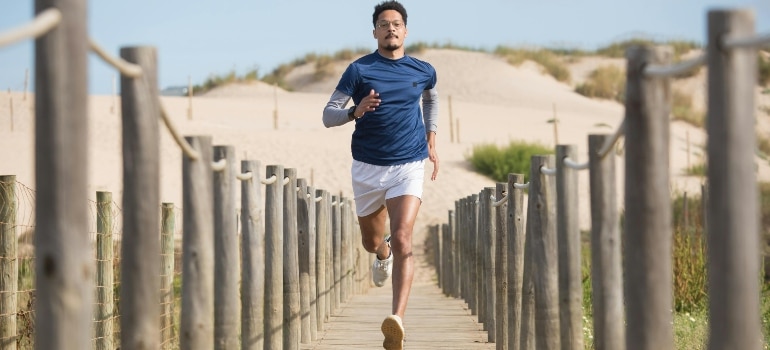
You do not need complex machines for a smart sore-day plan; you just need kind choices. First, check how your knees, hips, and lower back feel right now, then pick one option that feels gentle yet still active. Listen to your body first, then choose the low-impact move that feels right today. Here are some ideas our clients usually handle well on sore days:
- Brisk walking on flat ground for twenty to thirty minutes
- Easy cycling on a bike with light resistance
- Swimming laps at a relaxed and steady pace
- Deep water jogging with a flotation belt in the pool
- Short indoor step sessions with a low step height
Each option still counts as moderate aerobic exercise, so your heart and lungs benefit while muscles calm down. We often combine two of these in one week for variety, for example, a pool session after a heavy leg day and a bike ride after a long run. Over time, clients see that low-impact cardio alternatives for days when you’re feeling sore still build endurance and confidence, not just recovery.

Gentle Strength, Mobility, and Pilates on Sore Days
Low-impact days do not need to focus only on cardio; strength and mobility also play a big role. Our coaches often use box squats, glute bridges, and wall pushups in shorter circuits so muscles work without heavy strain. Light mobility work for hips, hamstrings, and upper back also keeps joints moving well between harder sessions. Many of our clients join small Pilates classes in Dubai to build deep core strength and better control. These sessions focus on breathing, alignment, and slow, precise movements instead of heavy weights. For many people, low-impact cardio alternatives for days when you’re feeling sore include this mix of gentle strength, core work, and controlled movement that supports future heavy training.
Planning Your Week So Soreness Does Not Win
Random hard sessions often create the worst soreness and the most skipped workouts. We prefer a simple weekly structure that balances stress and recovery instead. For example, you might lift heavier on Monday and Thursday, use low-impact cardio on Tuesday and Saturday, and then keep one complete rest day. This rhythm gives muscles time to repair while your heart still works several times each week. High mental stress also slows muscle recovery over time. Research on the stress response shows that chronic hormones increase fatigue and delay repair.
We also encourage clients to track sets, weight, and pain in a small notebook or app so patterns appear early. A basic “traffic light” system helps too: green pain feels mild and fades as you warm up, yellow pain feels sharper so you reduce load or adjust exercise, and red pain feels strong or sudden and calls for rest or medical advice. With this structure, low-impact cardio alternatives for days when you’re feeling sore fit neatly into a plan instead of feeling like random backup workouts.
Turning Sore Days Into Smarter Training Wins
Sore days often test commitment more than heavy days because progress feels less obvious. You still want strong lifts and faster runs, but you also want a body that stays healthy for years. Low-impact cardio alternatives for days when you’re feeling sore give you a practical middle ground between full rest and hard training. On these days you choose easier options, monitor your pain level, and back off quickly when something feels sharp or wrong. You also respect signs that call for extra sleep, better nutrition, or a full day off. Over time, our clients learn which low-impact options leave them feeling better after each session and where their limits sit during stressful weeks. Simple notes about sleep, steps, mood, and workout type help guide those choices, and our DubaiPT coaches use that information to shape future plans in a clear and effective way.


 CALL NOW


