
How to Fix Your Deadlift
Find Your Personal Trainer
Published: November 22, 2023
Whether you’re a seasoned gym-goer or just starting your fitness journey, there’s a good chance you’ve encountered the deadlift—an absolute powerhouse of an exercise that can do wonders for your strength and muscle development. But, let’s face it, we’ve all been there: that moment when your deadlift doesn’t quite feel right, and you’re left wondering, “Am I doing this correctly?” Fret not! We’re about to break down the mechanics of the deadlift, pinpoint common mistakes, and show you how to fix your deadlift. Join DubaiPT Personal Trainers, and let’s get lifting!
What is the Deadlift?
The deadlift is a fundamental and compound weightlifting exercise that primarily targets the muscles in your lower back, hips, glutes, hamstrings, and core. It’s considered one of the “big three” powerlifting exercises along with the squat and bench press. The beauty of the deadlift lies in its simplicity – you lift a loaded barbell from the ground to a standing position.

Here’s a basic breakdown of the deadlift:
- Starting Position: Stand with your feet about hip-width apart, with the barbell over the middle of your feet. Your toes can be slightly turned out. Bend at your hips and knees to lower your body, maintaining a straight back.
- Grip: Reach down and grab the bar with your hands just outside your knees. You can choose between a double overhand grip (both palms facing you) or a mixed grip (one palm facing you, one facing away) for a stronger hold.
- Lift: Engage your core, keep your chest up, and drive through your heels as you stand up, lifting the barbell along your legs. The movement involves extending your hips and knees simultaneously.
- Finish: Stand up straight with your shoulders back, holding the barbell at hip level. Make sure to fully lock out your hips and knees.
- Lowering the Bar: To complete the repetition, reverse the movement, hinging at your hips and bending your knees to lower the bar back to the ground in a controlled manner.
The Benefits of the Deadlift
Incorporating deadlifts into your fitness routine offers numerous benefits. This compound exercise engages multiple muscle groups simultaneously, promoting overall strength development. The deadlift mirrors everyday movements, like lifting objects from the ground, making it a functional exercise with real-life applications.
Additionally, it effectively targets the muscles along the back of your body, including the lower back, glutes, and hamstrings. Therefore, it’s one of the best back pain exercises if you perform it correctly. Also, compound exercises like the deadlift have been shown to stimulate the release of growth hormone and testosterone, promoting muscle growth and fat loss.
Furthermore, it enhances grip strength since you need to hold onto the barbell throughout the lift. The exercise also requires a strong and stable core. This improves posture and reduces the risk of lower back pain.
Types of Deadlift
There are several variations of deadlifts, each with its unique characteristics and emphasis on different muscle groups. Here are some common types:
- Conventional Deadlift: Feet are hip-width apart, and hands grip the barbell just outside the knees. It targets the lower back, glutes, hamstrings, quadriceps, and core.
- Sumo Deadlift: Wider stance with feet positioned outside shoulder-width, and hands gripping the barbell inside the knees. Places more emphasis on the inner thighs (adductors).
- Romanian Deadlift (RDL): Involves a slight bend in the knees, and the movement primarily occurs at the hips. The barbell travels down the front of the legs. Focuses on the hamstrings and glutes.
- Trap Bar Deadlift: Involves using a hexagonal bar, with the lifter standing inside the bar rather than behind it. Similar to the conventional deadlift but may be considered more joint-friendly.
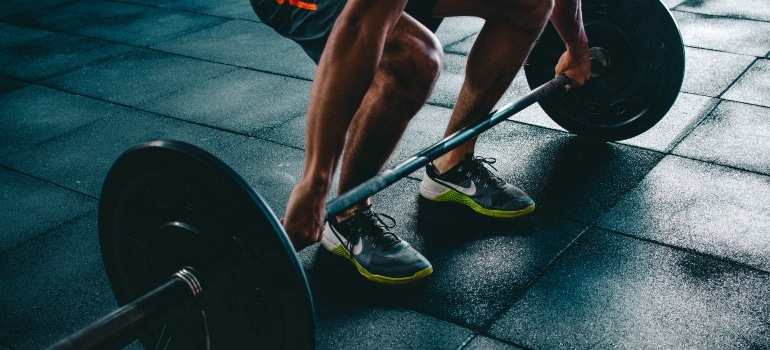
Each type of variation has its benefits and considerations. The choice of which deadlift variation to include in your routine may depend on your individual goals, body mechanics, and any specific areas you want to target or avoid. If you’re unsure where to start consult a personal trainer for muscle building.
Common Mistakes
Common mistakes in deadlifting often stem from improper form and can lead to injury or hinder progress. One frequent error is rounding the lower back during the lift, which puts undue stress on the spine. To avoid this, focus on maintaining a neutral spine throughout the movement, engaging your core to stabilize and protect your back.
Another common pitfall is letting the bar drift too far away from your body, which can strain the lower back and compromise the lift. Keep the bar close to your legs throughout the entire range of motion, ensuring a straight bar path.
Neglecting proper hip hinge mechanics is another mistake that can limit the involvement of crucial muscle groups. Initiate the lift by pushing your hips back before bending your knees, emphasizing the hip hinge to fully engage the glutes and hamstrings.
Lastly, rushing the descent and bouncing the bar off the floor can diminish the effectiveness of the exercise and increase injury risk. Instead, lower the bar under control, maintaining tension in your muscles.
How to Gradually Increase Weight?
One critical mistake that can lead to injury is the temptation to increase weight too soon or excessively. Rapidly adding weight may compromise your form and strain your muscles and joints, increasing the risk of injury. To ensure a safe and gradual progression, prioritize small, incremental increases in weight over time.
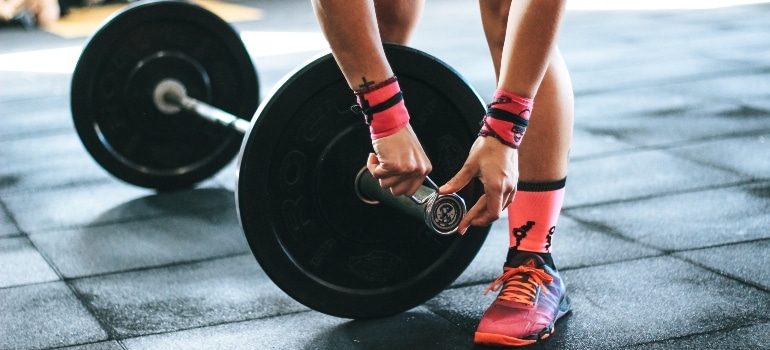
A general rule of thumb is to add no more than 5-10 pounds to each side of the barbell per session. Listen to your body and pay attention to how the current weight feels before deciding to increase. Additionally, consider incorporating planned deload weeks into your training, where you intentionally decrease the intensity or volume to allow your body to recover. Make sure to always prioritize proper form over lifting heavier weights, and focus on building a solid foundation before attempting significant increases.
How to Fix Your Deadlift Easily?
Learning how to fix your deadlift is not only about building strength but also ensuring longevity in your fitness journey. Remember, the key to an effective deadlift lies in consistent practice, attention to form, and a gradual approach to increasing weights. However, no written guide can replace the personalized guidance of a qualified personal trainer. If you’re serious about perfecting your deadlift and avoiding potential pitfalls, consider consulting with an affordable personal trainer Dubai offers who can provide hands-on instruction and real-time feedback.


 CALL NOW


